
Immigration fraud is one of the most devastating financial crimes affecting African families. Victims lose hundreds, and sometimes thousands, of dollars to agents who disappear after collecting deposits, submit fake applications, or simply never existed in the first place.
This article will help you understand how to spot a visa scam, verify legitimate agents, and recognize the warning signs that many fraudulent immigration operators use across Nigeria, Ghana, and Kenya.
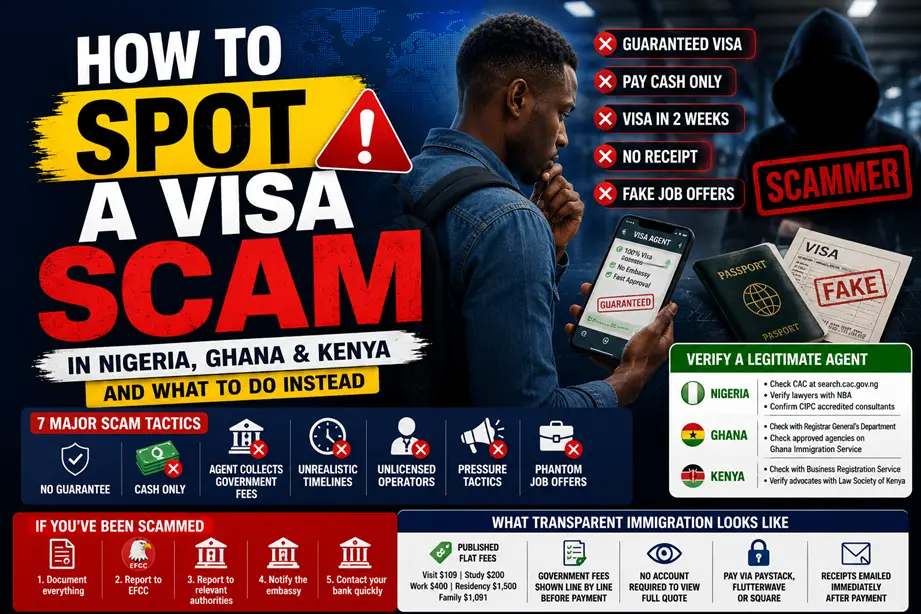
The 7 Biggest Visa Scam Tactics in West and East Africa
1. The “Guaranteed Visa” Promise
Legitimate immigration consultants cannot guarantee visa approval. Only the embassy or government of the destination country makes that decision. Therefore, any agent claiming a 100% success rate should raise concerns immediately. Learning how to spot a visa scam starts with avoiding unrealistic promises.
2. Cash Only Payments With No Receipts
Fraudulent agents often insist on cash payments and resist providing receipts, contracts, or written documentation of services. Therefore, always request a formal receipt, a written service agreement and proper payment documentation before making payment.
3. Paying Government Fees Through the Agent
Visa fees, biometric fees, SEVIS, IHS, and other government charges should be paid directly to the issuing authority, not through an agent’s personal or business account. As a result, agents who insist on collecting government fees themselves should be treated carefully.
4. Unrealistic Processing Timelines
- “UK visa in 2 weeks, no embassy required.”
- “Canada PR in 3 months.”
These claims are usually false. In reality, immigration authorities publicly provide realistic processing timelines for each country. Understanding official timelines is another important part of learning how to spot a visa scam.
5. Unlicensed Operators With No Verifiable Identity
Many fraudulent agents operate only through WhatsApp or Instagram without a physical office, CAC registration, or a professional accreditation. Before engaging any consultant, verify their business registration properly.
6. Pressure Tactics and Artificial Urgency
- “Only 2 spots left.”
- “This offer expires today.”
Scammers often use urgency to stop applicants from carrying out proper checks. However, legitimate consultants will never pressure you into paying before you are ready.
7. Phantom Job Offers
A particularly common immigration scam involves fake work permit applications built around fabricated UK or Canadian employer sponsors. In many cases, victims receive fake Certificate of Sponsorship documents and pay large sums before discovering that the employer does not exist.
How to Verify a Legitimate Immigration Consultant
Nigeria
- Check CAC registration at search.cac.gov.ng
- For lawyers, verify through the Nigerian Bar Association
- For CIPC accredited consultants, confirm credentials directly
Ghana
- Check business registration with the Registrar General’s Department
- Ghana Immigration Service publishes approved agencies
Kenya
- Check business registration through the Business Registration Service
- For Kenyan advocates, verify through the Law Society of Kenya
What Transparent Immigration Looks Like
Emigrates was built as a direct response to immigration fraud targeting African applicants. Therefore, every aspect of the platform focuses on transparency.
Key features include:
- Published flat fees
- Visit: $109
- Study: $200
- Work: $400
- Residency: $1,500
- Family: $1,091
- Government fees shown line by line before payment
- No account required before viewing the full quote
- Payment through Paystack, Flutterwave, or Square
- Receipts emailed immediately after payment
What to Do If You Have Been Scammed
1. Document Everything
Keep screenshots, receipts, WhatsApp messages, email conversations, or any other form of communication with the scammer.
2. Report to the EFCC
Report cases through the official EFCC Reporting Portal.
3. Report to Relevant Authorities
- Ghana cases can be reported to GIPC
- Kenyan cases can be reported to the DCI
4. Notify the Embassy
You should also report fraudulent sponsor licenses or fake visa activities to the embassy of the destination country.
5. Contact Your Bank Quickly
If payment was made through bank transfer, contact your bank immediately. In some situations, banks may still attempt a clawback within 24 to 72 hours.
Conclusion
Knowing how to spot a visa scam can help you avoid fake agents, fraudulent applications, and unnecessary financial losses. More importantly, verifying consultants properly, avoiding unrealistic promises, and demanding transparency can significantly reduce your chances of becoming a victim. Before making any payment, always take time to confirm that the immigration consultant or platform is legitimate.
Check out our consultancy fees on Emigrates and start your application today.